Power Outage Troubleshooting Checklist
Power outage troubleshooting starts with checking whether the outage affects one room, the whole property, or the wider utility service, then inspecting accessible breakers and signs of damage without touching unsafe equipment. GMB Electric handles electrical troubleshooting and emergency electrical repair when the cause is unclear, the outage is partial, or electrical hazards are present.
Request an Estimate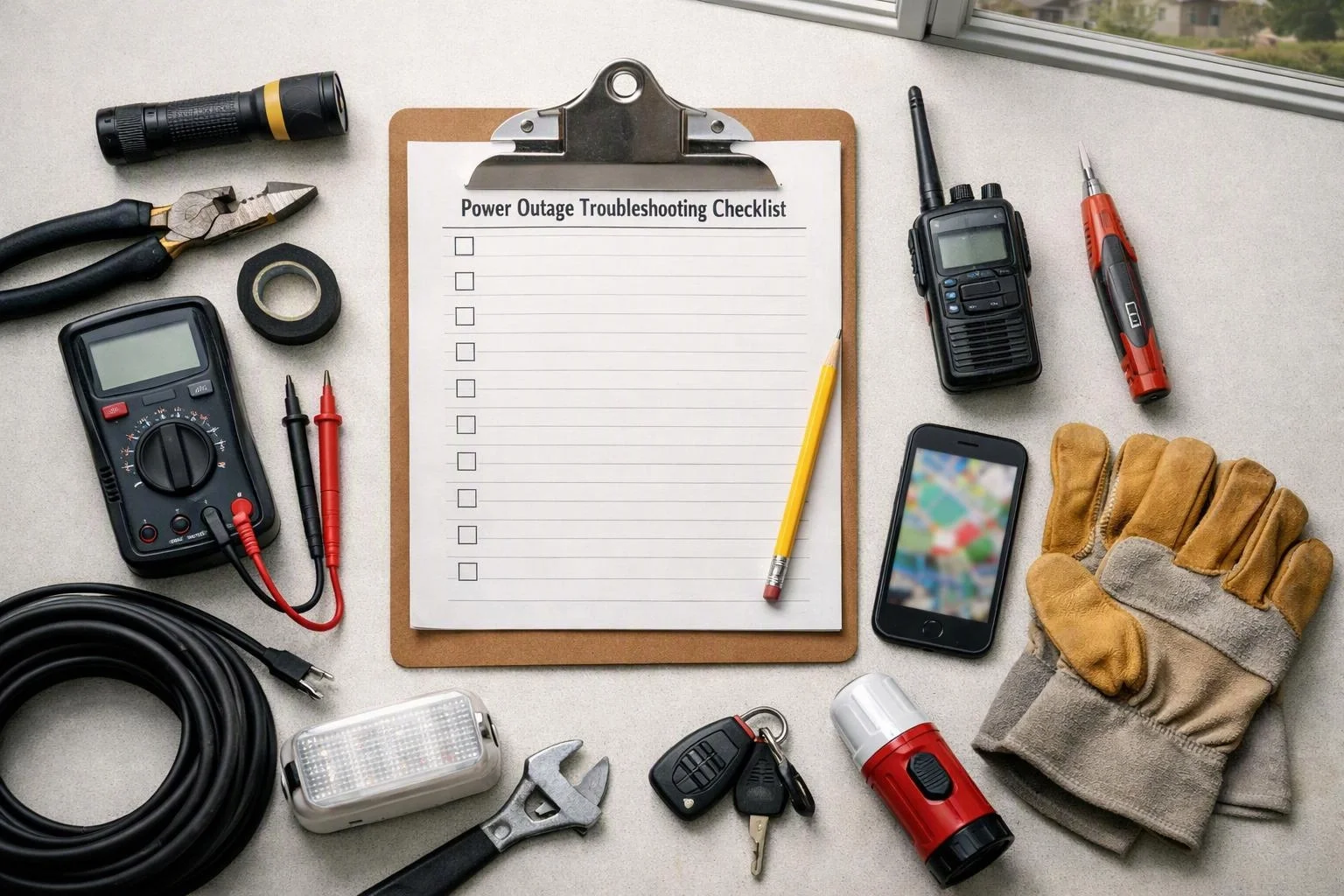
What to Check When the Power Goes Out
Power outage troubleshooting begins by determining whether the outage affects the entire property, part of the property, or the surrounding utility service.
Check whether nearby buildings or streetlights also have a power loss. If the utility service appears interrupted across the area, follow the utility’s outage reporting process and keep clear of damaged equipment.
If only your property is affected, look at the electrical panel without removing its cover. A circuit breaker may have tripped, or an outlet may have lost power because of GFCI protection.
Do not touch an electrical panel, outlet, or service entrance that is hot, wet, damaged, smoking, or making unusual sounds. Our team can trace the electrical fault safely when the cause is not clear.
Follow This Power Outage Troubleshooting Checklist
A careful checklist helps separate a utility disruption from a branch-circuit problem. Stop the inspection whenever you see damage, smell burning, or feel unsure about electrical safety.
A breaker that will not reset can point to a fault, overload, damaged appliance, or loose connection. We trace the circuit and identify the repair need without asking you to work inside the panel.
Signs an Electrical Outage Needs Immediate Attention
Some outage symptoms indicate an active electrical hazard. Leave the area and contact emergency services when there is fire, smoke, or an immediate threat to people or property.
Do not turn damaged equipment back on to test it. We inspect the affected circuit and recommend emergency electrical repair when the condition presents a hazard.
Common Causes of Partial Power Outages
A partial outage means some circuits or rooms have power while others do not. The cause may be inside the property even when the utility service appears normal.
Repeated trips are not a normal reset routine. Our electrical troubleshooting process checks the circuit, connected equipment, and panel connections to locate the underlying problem.
How to Troubleshoot One Room Without Creating a Hazard
A one-room outage usually calls for checking nearby outlets, GFCI protection, and the corresponding breaker while leaving damaged or hot equipment untouched.
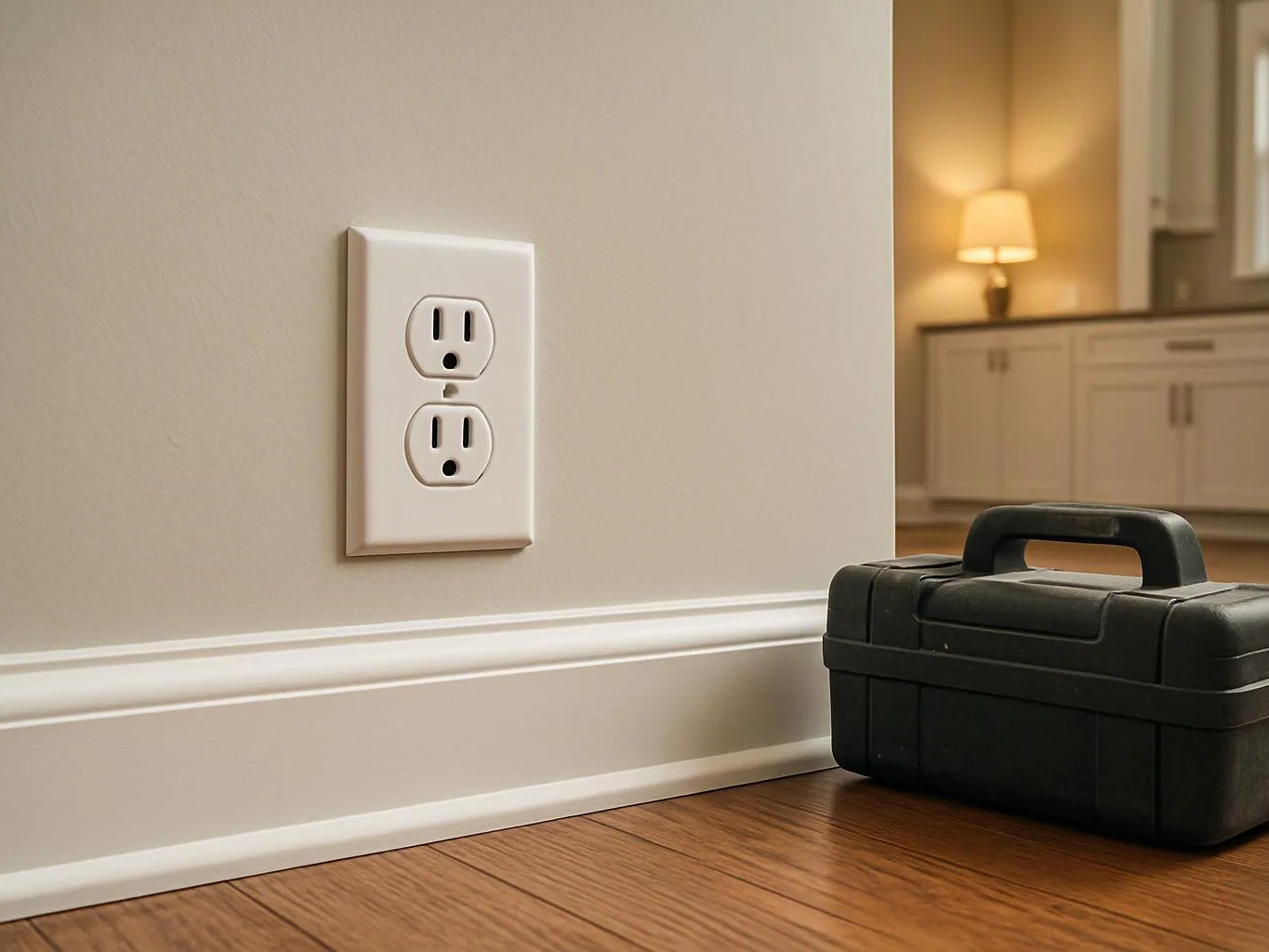
Start with the single-room outage area and identify whether the wall outlet, light switch, or ceiling fixture has power. Check nearby GFCI protection and the circuit breaker only when the equipment is dry and undamaged.
Unplug devices from the affected outlets before attempting a safe breaker reset. Do not remove outlet covers, open the breaker panel, or touch wiring to restore power.
We trace the branch circuit when the room remains without power or the breaker trips again. The Electrical Troubleshooting service can help identify concealed faults and unsafe connections.
What to Do After a Storm or Electrical Surge
Storm damage, lightning, and an electrical surge can affect wiring, appliances, and service equipment even when power returns. Treat water intrusion and damaged electrical parts as active hazards.
Storm-related outages can hide problems behind walls or inside equipment. We inspect the affected electrical system and explain the repair needs before work begins.
How to Prevent Avoidable Power Problems
Good electrical habits reduce stress on branch circuits and help reveal problems before a full outage occurs. Prevention cannot remove every utility disruption or weather-related electrical damage.
Our team can inspect recurring trips, flickering lights, and overloaded circuits before they become a larger electrical problem. We also explain which repairs address the cause and which changes improve safe operation.
How to Document an Electrical Problem Safely
Electrical problem documentation should record the affected areas, visible damage, breaker position, unusual sounds or odors, and the conditions surrounding the outage without requiring contact with unsafe equipment.
Write down which rooms lost power and whether the event involved flickering service, a storm, a surge, or a tripped breaker. Note what was running when the power failed.
Take a photograph of the breaker panel and outlet only from a safe position. Do not remove covers, touch wiring, or move a breaker to create a clearer image.
Keep repair records, appliance information, and notes about repeated power loss together. Our team uses those details to focus the inspection and explain the repair estimate.
When to Call GMB Electric
GMB Electric should handle an outage when the cause remains unclear, power returns and fails again, a breaker will not reset, or the property shows signs of electrical damage.
Call us for electrical troubleshooting when a partial outage affects a room or circuit, when lights continue to flicker, or when a GFCI outlet repeatedly trips. Our team checks the breaker panel, branch circuits, outlets, and service connections as the condition requires.
Emergency electrical repair is appropriate when you see smoke, sparking, a burning smell, exposed wiring, a hot panel, storm damage, or surge damage. Keep clear of downed power lines and damaged equipment while arranging help.
Contact GMB Electric through our contact page to discuss the outage and arrange the next step.
Questions About Power Outage Troubleshooting
Why did only one room lose power?
One room can lose power because of a tripped breaker, tripped GFCI outlet, overloaded circuit, or loose connection. GMB Electric traces the affected circuit when safe resets do not restore power.
Why does a circuit breaker keep tripping after the power comes back?
A circuit breaker that keeps tripping can indicate an overload, damaged appliance, short circuit, or loose connection. Stop resetting the breaker and contact our team for electrical troubleshooting.
Can a power outage damage appliances?
Yes, a power outage can damage appliances when restoration includes a surge or unstable voltage. Unplug equipment only when the outlet and cord are dry and undamaged, and ask our team to inspect suspected surge damage.
Should I reset the breaker after a storm?
No, do not reset the breaker after a storm when the panel is wet, hot, damaged, or near water intrusion. We inspect storm damage and the electrical system before recommending safe restoration.
What should I do if the lights flicker but the power does not go out?
Flickering lights can indicate a loose connection, overloaded circuit, failing fixture, or unstable service. Stop using equipment that shows heat or damage, document the symptoms, and contact our team for an inspection.
GMB Electric handles unclear outages, partial power loss, flickering service, storm-related damage, and electrical hazards. Contact us so our team can review the symptoms and plan the appropriate electrical troubleshooting or emergency electrical repair.