
What Is a Smoke Detector?
A smoke detector is a life-safety device that senses airborne particles from combustion and produces an alert when smoke reaches its sensing chamber. A detector may operate as a standalone unit or connect to a fire alarm system. Smoke detectors help identify developing fires, while heat detectors respond to temperature changes instead of smoke.
Quick Facts About Smoke Detector
Category
Fire detection device
Used for
Detecting airborne combustion particles
Common confusion
A detector senses smoke, while an alarm warns occupants
Also called
Smoke Alarm
Often discussed with
Fire Alarm Installation, Electrical Safety Inspection
Key Takeaways About Smoke Detector
- A detector senses smoke, while an alarm produces the audible warning.
- Placement and wiring affect how quickly a detector can signal.
- Smoke detectors are not the same as heat detectors.
How Smoke Detector Works
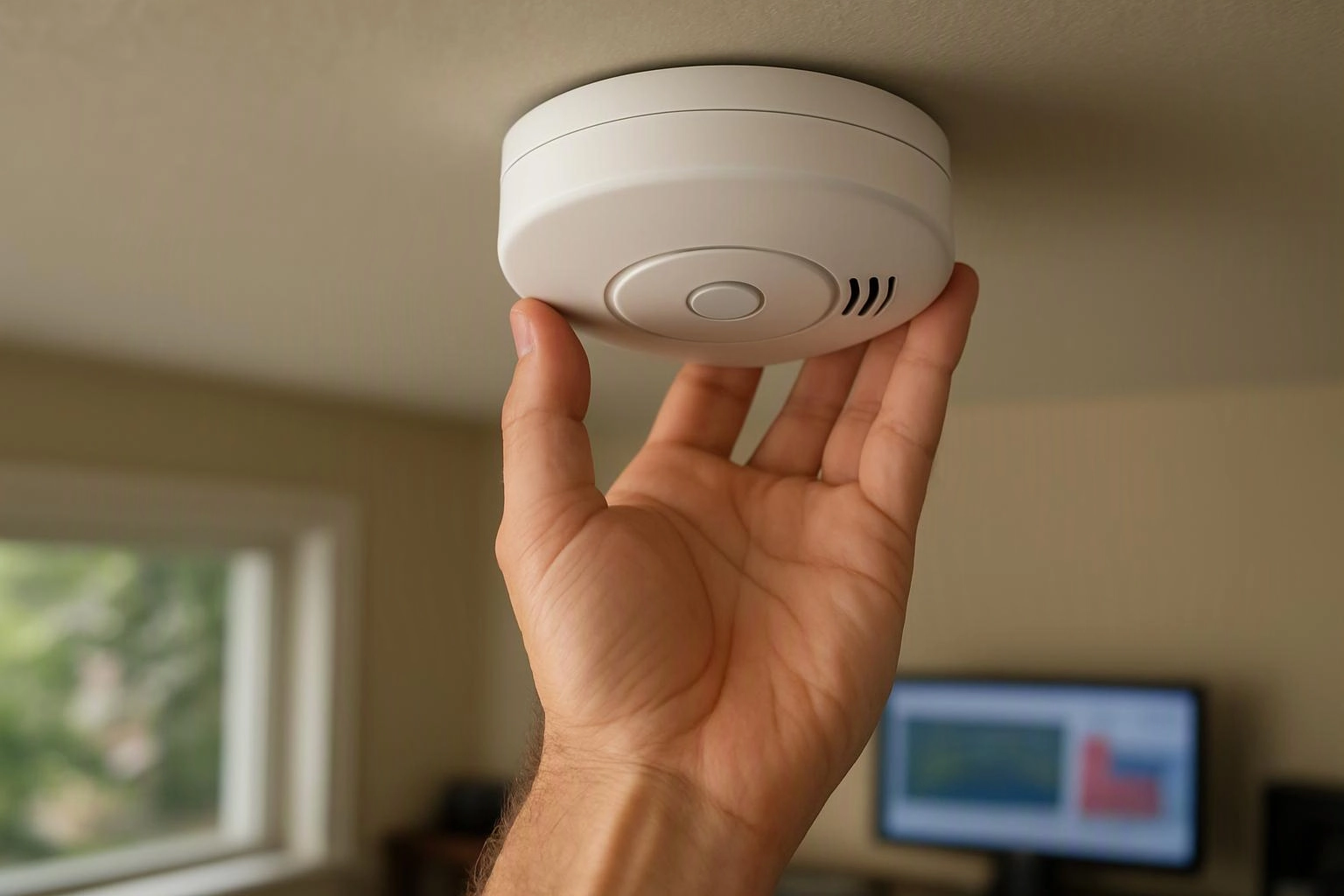
A smoke detector monitors air inside a sensing chamber for particles associated with combustion. Photoelectric models use a light source and sensor to detect changes caused by smoke. Ionization models monitor electrical conditions inside the chamber. Both designs send a signal when smoke reaches the device's detection threshold.
Related glossary terms: Heat Detector, Wiring Diagram, Continuity Test.
The signal may activate a built-in sounder or travel through wiring to a fire alarm control panel. Interconnected detectors can cause multiple warning devices to respond when one unit detects smoke. A heat detector works differently because it responds to temperature conditions. During fire alarm installation, the device type, location, wiring method, and connection to the alarm system determine how the detector functions as part of the whole installation.
From the GMB Electric team
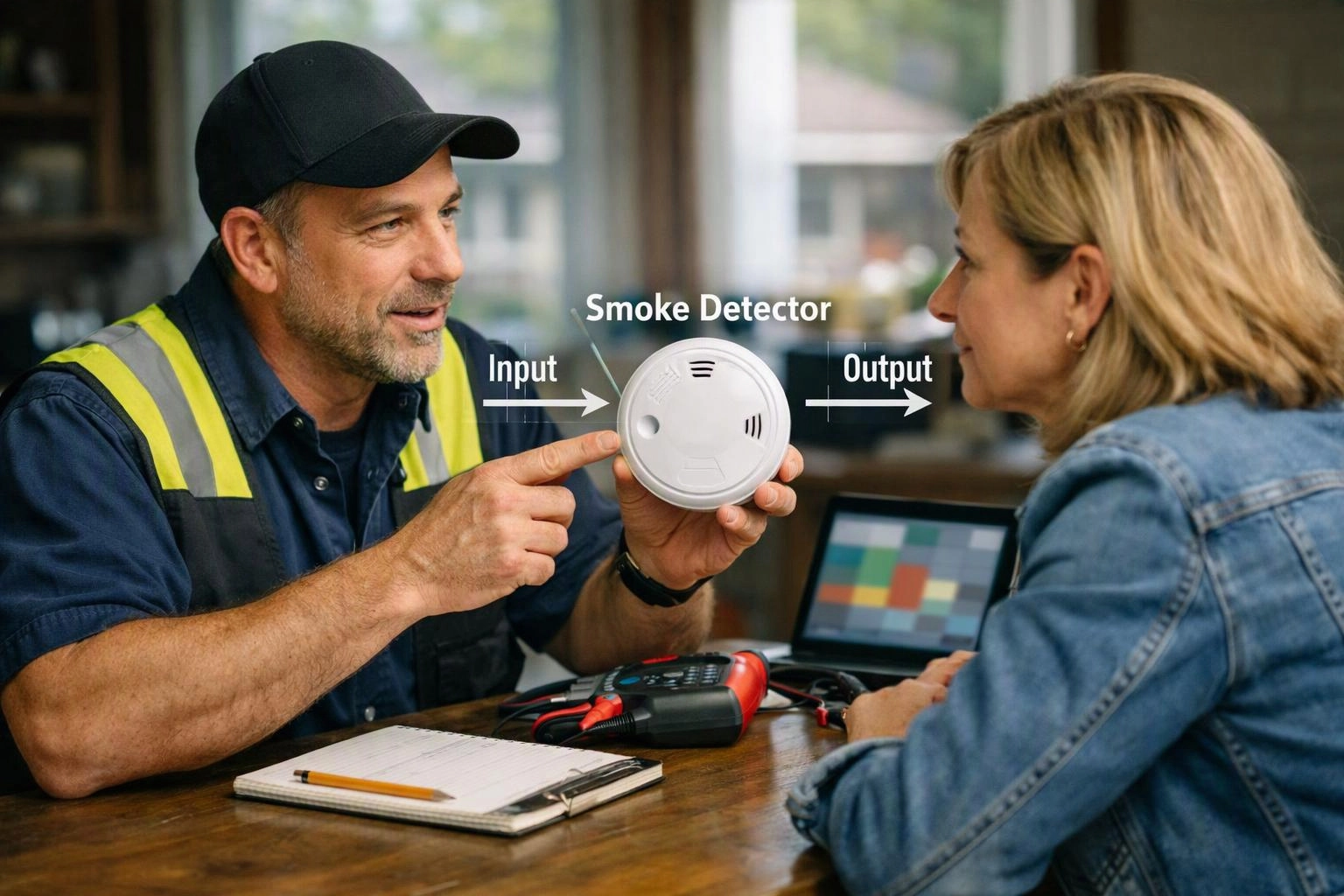
When we install or service smoke detectors, we check the device location, wiring, connections, and communication with the fire alarm system. We also test the detector and the connected notification devices so the system response matches the installation design.
Smoke Detector in Practice: A Real-World Example
A homeowner adding a fire alarm system may have smoke detectors installed in sleeping areas, hallways, and other planned locations. Each detector can signal its local sounder or communicate with the fire alarm control panel when smoke enters its sensing chamber.
Related Terms
Heat Detector
A Heat Detector is a fire alarm initiating device that responds to unusually high heat or…
Wiring Diagram
Wiring Diagram is a visual plan that shows how electrical devices, conductors, terminals, and protective components…
Continuity Test
A continuity test is an electrical check that determines whether a circuit path is complete from…
GMB Electric
Have Questions About Smoke Detector?
Contact GMB Electric for practical guidance on Smoke Detector and related 24 hour electrician work in Indianapolis.