
What Is a Heat Detector?
A Heat Detector is a fire alarm initiating device that responds to unusually high heat or a rapid rise in temperature. It sends a signal to an alarm control panel when its sensing element reaches a set condition. Heat detectors suit areas where smoke, dust, fumes, or steam could cause unwanted alarms.
Quick Facts About Heat Detector
Category
Fire alarm initiating device
Used for
Detecting abnormal heat conditions
Common confusion
Confused with a smoke detector
Also called
Thermal detector
Often discussed with
Fire Alarm Installation, Electrical Safety Inspection
Key Takeaways About Heat Detector
- Heat detectors respond to temperature, not visible smoke.
- They suit locations where smoke detectors may produce unwanted alarms.
- A heat detector is not the same device as a smoke detector.
How Heat Detector Works
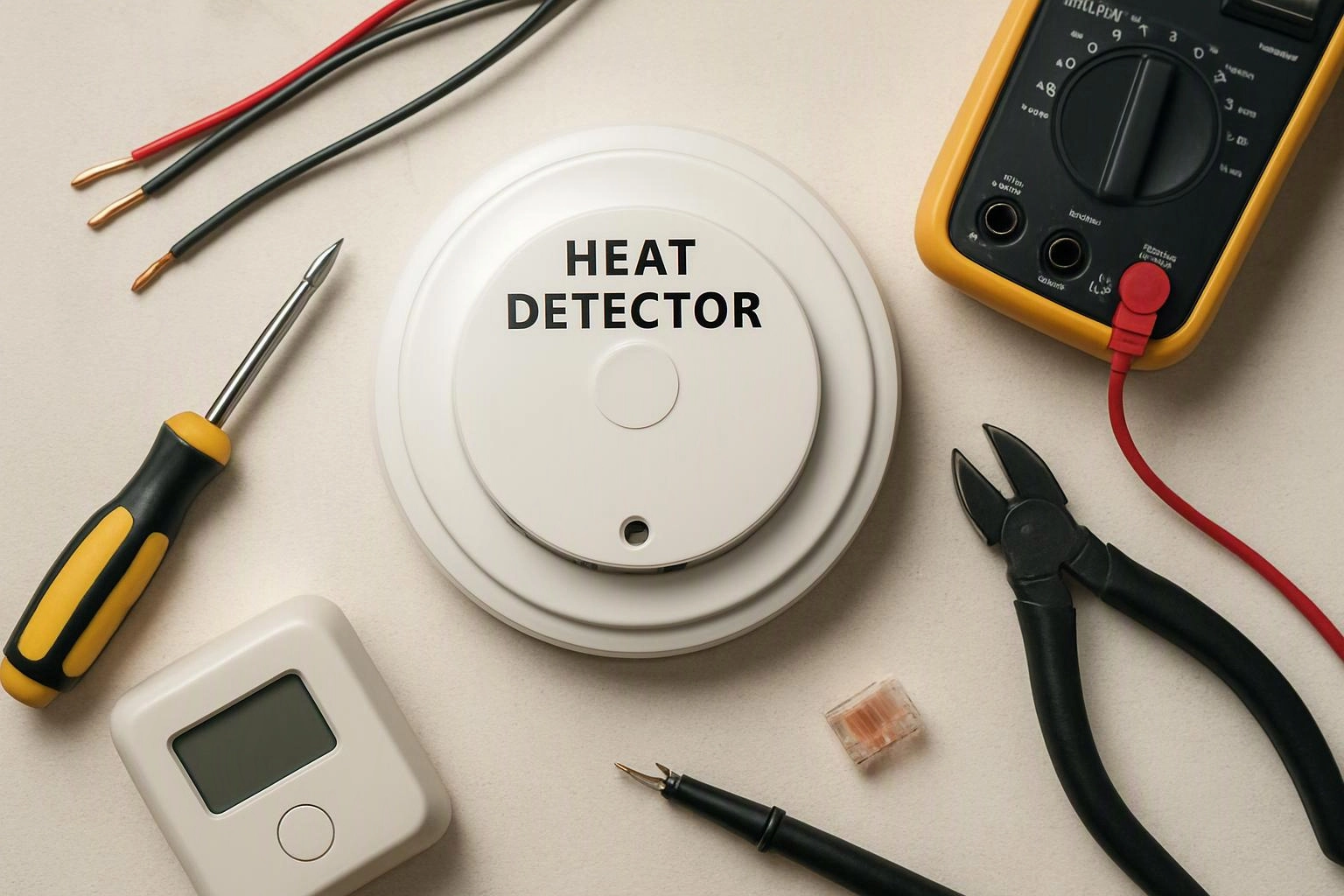
A heat detector monitors temperature near its sensing element and changes state when conditions reach its operating threshold. The device then sends a signal through the fire alarm wiring to the fire alarm control panel. The panel processes that signal and activates the connected notification appliances according to the system design.
Related glossary terms: Smoke Detector, Circuit Breaker, Wiring Diagram.
Some heat detectors respond when temperature reaches a fixed point. Others respond to a rapid temperature increase. A combination model can use both methods. Installers select the sensing method and device location based on the room’s conditions, including dust, cooking vapors, vehicle exhaust, or steam. Wiring, device compatibility, and system testing also affect dependable operation.
From the GMB Electric team
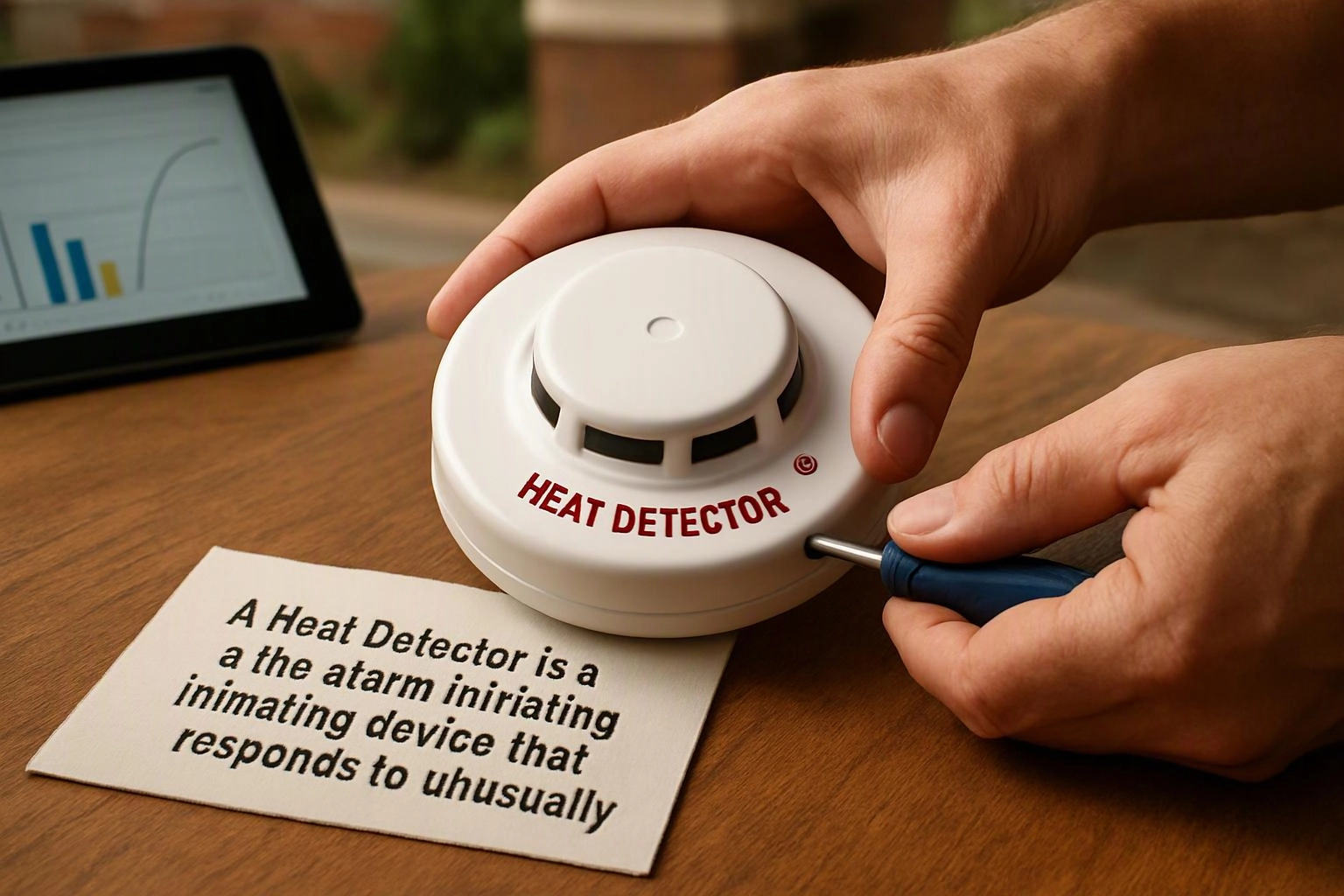
When we install or service fire alarm systems, we check the heat detector’s location, wiring, device condition, and connection to the control panel. We also test the initiating circuit and confirm that the alarm response matches the system design.
Heat Detector in Practice: A Real-World Example
A detached garage may produce exhaust, dust, or temperature changes that make smoke detection unsuitable. A heat detector can monitor the space and send an alarm signal when its sensing condition is reached.
Related Terms
Smoke Detector
A smoke detector is a life-safety device that senses airborne particles from combustion and produces an…
Circuit Breaker
A Circuit Breaker is a resettable electrical switching device that opens a circuit when current exceeds…
Wiring Diagram
Wiring Diagram is a visual plan that shows how electrical devices, conductors, terminals, and protective components…
GMB Electric
Have Questions About Heat Detector?
Contact GMB Electric for practical guidance on Heat Detector and related 24 hour electrician work in Indianapolis.