
What Is a Circuit Breaker?
A Circuit Breaker is a resettable electrical switching device that opens a circuit when current exceeds a safe operating level. The device interrupts power to protect conductors and connected equipment from overcurrent. After the cause is corrected, the breaker can be reset. Unlike a fuse, a breaker does not require replacement after operation.
Quick Facts About Circuit Breaker
Category
Overcurrent protection device
Used for
Interrupting unsafe circuit current
Common confusion
A trip may result from a circuit problem
Also called
Overcurrent breaker, Electrical breaker
Often discussed with
Electrical Panel Repair
Key Takeaways About Circuit Breaker
- A breaker resets after operation, while a fuse must be replaced.
- The breaker protects circuit wiring from excessive current.
- A tripped breaker does not always mean the breaker itself failed.
How Circuit Breaker Works
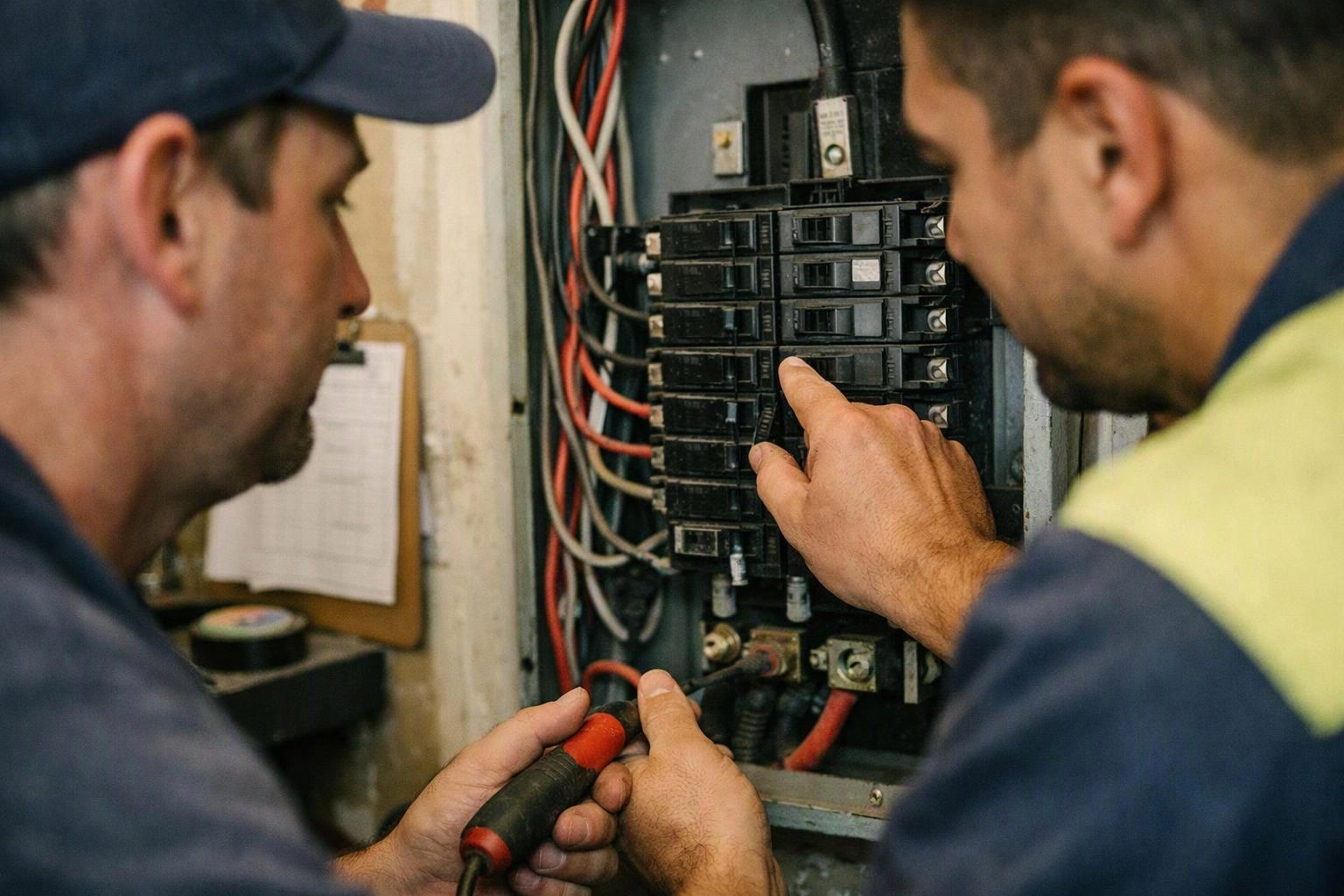
A circuit breaker monitors current moving through a branch circuit. When current rises beyond the breaker's intended operating range, an internal mechanism opens the contacts and stops power flow. The opening action protects the circuit conductors from continued overcurrent. A breaker may also open during a short circuit or another fault condition.
Related glossary terms: Arc-Fault Circuit Interrupter, Overcurrent Protection, Panelboard.
A tripped breaker moves to a position that shows the circuit has opened. Resetting the handle restores power only when the underlying condition has cleared. Repeated trips can point to an overloaded circuit, a wiring fault, or a connected appliance problem. A fuse performs a similar protective function but must be replaced after it operates. An Arc-Fault Circuit Interrupter adds protection against certain hazardous arcing conditions.
From the GMB Electric team
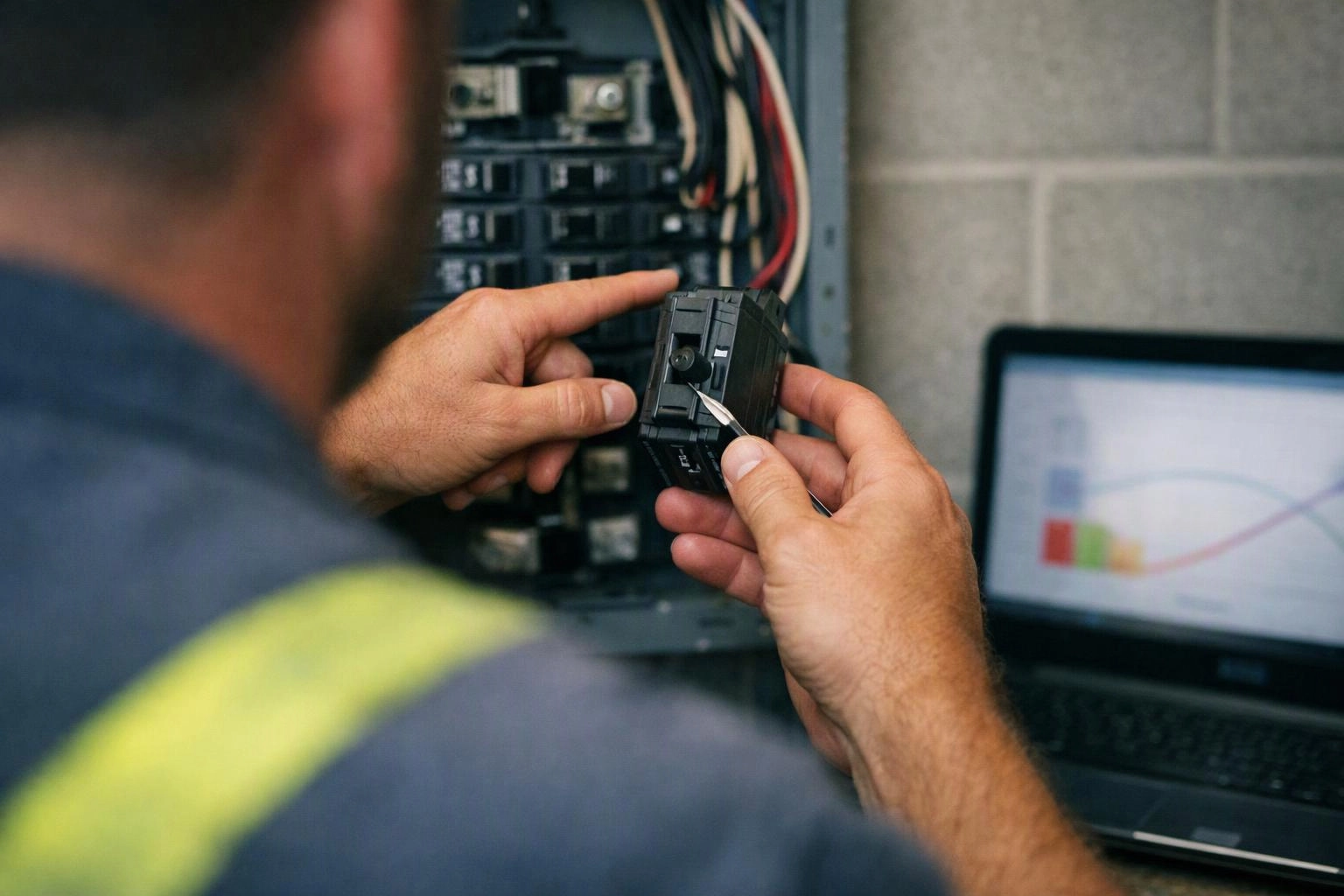
When we inspect a circuit breaker, we check its condition, connections, labeling, and relationship to the circuit it protects. We also look for signs of heat, loose terminations, repeated tripping, or a fault downstream. Our team separates a defective breaker from a circuit problem before recommending panel repair.
Circuit Breaker in Practice: A Real-World Example
A kitchen circuit breaker trips when several appliances operate together. The panel repair assessment checks the breaker, circuit connections, and connected load to identify whether the issue involves the breaker or the circuit.
Related Services
Related Terms
Arc-Fault Circuit Interrupter
An Arc-Fault Circuit Interrupter is a protective device that monitors electrical current for patterns linked to…
Overcurrent Protection
Overcurrent Protection is a system that limits electrical current when a circuit carries more power than…
Panelboard
A panelboard is an electrical enclosure that holds circuit breakers, busbars, and connection points for distributing…
Busbar
A busbar is a conductive metal strip or bar that distributes electrical power among connected circuits…
GMB Electric
Have Questions About Circuit Breaker?
Contact GMB Electric for practical guidance on Circuit Breaker and related 24 hour electrician work in Indianapolis.