What Is a Bidirectional Inverter?
A Bidirectional Inverter is a power conversion device that sends direct-current energy to an alternating-current system and converts alternating-current power back to direct current. This two-way operation supports energy exchange between equipment such as an electric vehicle, battery, solar system, and building electrical service while managing voltage, current, and operating mode.
Quick Facts About Bidirectional Inverter
Category
Power conversion equipment
Used for
Battery and vehicle energy exchange
Common confusion
Often mistaken for a one-way inverter
Also called
Bidirectional power inverter, Two-way inverter
Often discussed with
Bidirectional charging system troubleshooting, Emergency EV charger repair
Key Takeaways About Bidirectional Inverter
- Energy flows in both directions through the same conversion equipment.
- System controls coordinate charging, discharging, and grid interaction.
- A bidirectional inverter is not the same as a standard inverter.
How Bidirectional Inverter Works
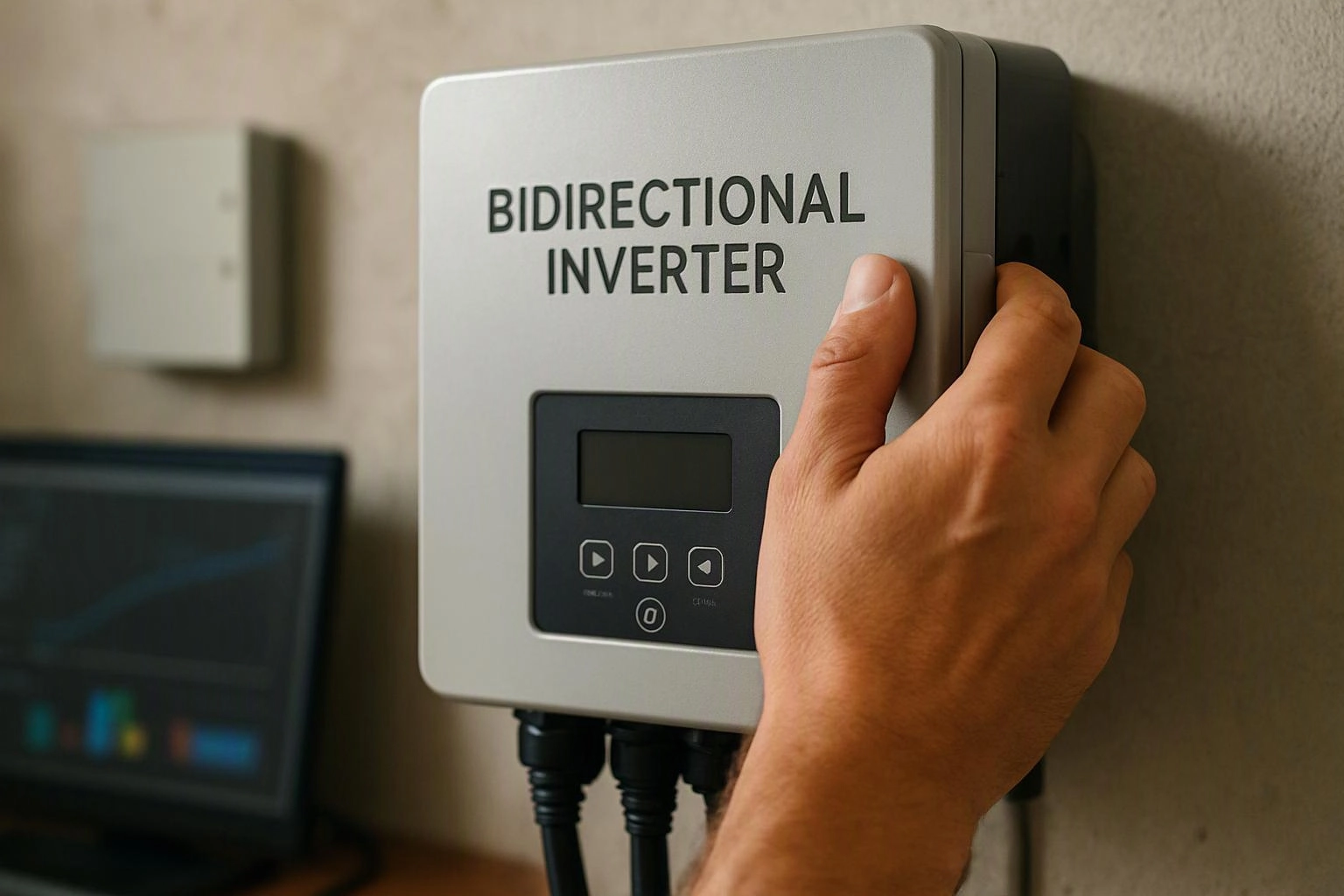
A Bidirectional Inverter changes direct-current power into alternating-current power during discharge. During charging, the conversion path reverses and sends controlled direct current into a battery or vehicle battery. Internal switching devices and control software coordinate the direction, voltage, current, and timing of that transfer.
Related glossary terms: Inverter, EVSE, Islanding.
The equipment communicates with connected systems before energy moves. A battery management system reports battery condition, while EVSE manages the charging connection for an electric vehicle. The inverter also monitors electrical conditions and can stop or adjust power when system values fall outside its operating limits. Wiring, disconnects, grounding, and control signals must match the equipment design for the system to operate correctly.
From the GMB Electric team
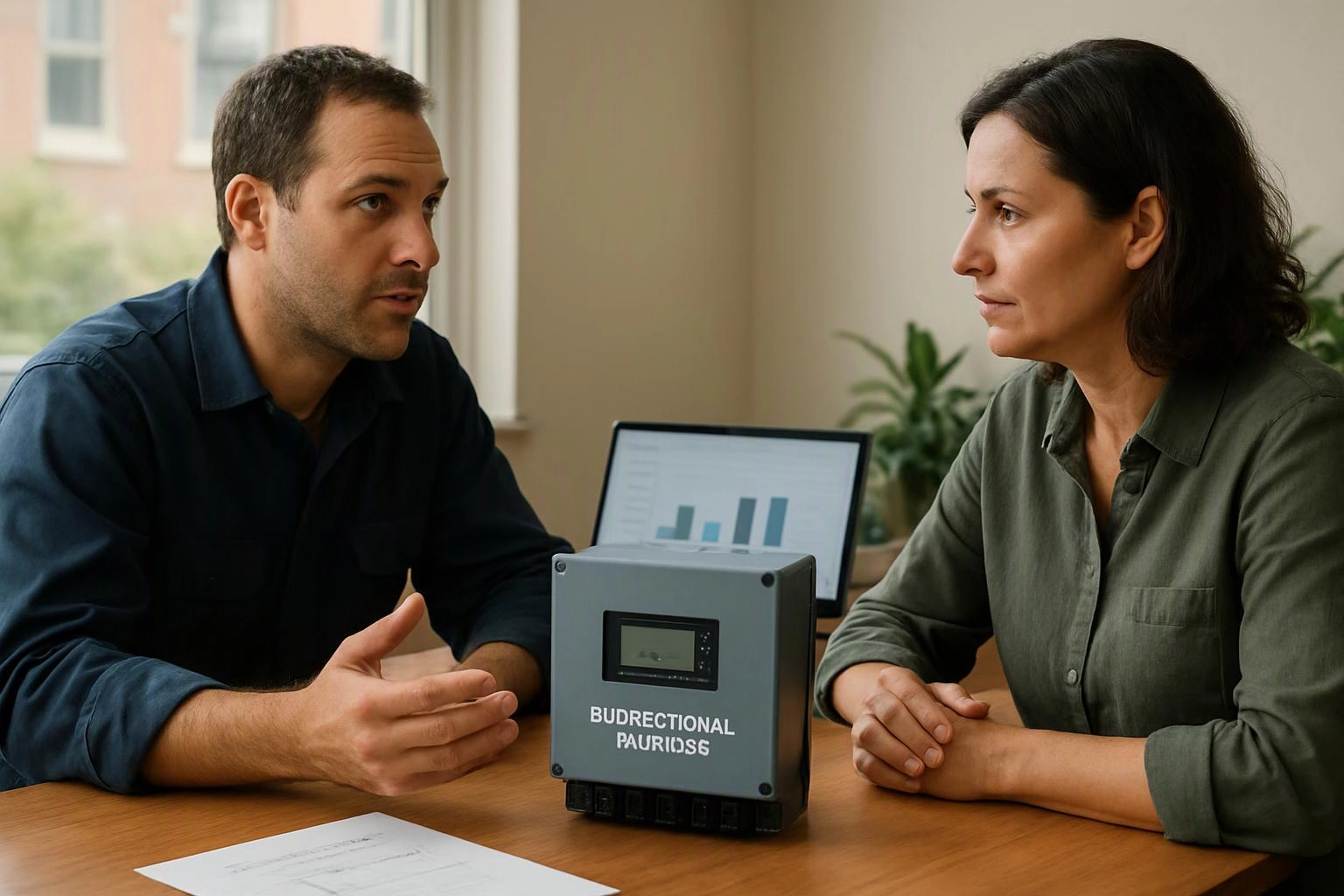
When we troubleshoot a bidirectional inverter, we check the power path, control connections, system status, and equipment documentation. We compare measured conditions with the system’s operating information to separate inverter faults from problems in the battery, EVSE, wiring, or connected electrical service.
Bidirectional Inverter in Practice: A Real-World Example
A homeowner uses an electric vehicle with a bidirectional charging system connected to the home electrical service. During troubleshooting, we may find that the inverter operates correctly while a communication fault prevents the vehicle from accepting or supplying power.
Related Terms
Inverter
An inverter is an electrical device that changes direct current into alternating current for equipment designed…
EVSE
EVSE is equipment that supplies electrical power to an electric vehicle and manages the connection between…
Islanding
Islanding is a condition in which a distributed energy system continues supplying power to a section…
Load Management
Load Management is the planned control of electrical demand across connected equipment. The system monitors available…
GMB Electric
Have Questions About Bidirectional Inverter?
Contact GMB Electric for practical guidance on Bidirectional Inverter and related 24 hour electrician work in Indianapolis.