
What Is a Multimeter?
A multimeter is a handheld electrical testing instrument that measures values such as voltage, current, and resistance. It combines several testing functions in one tool and displays readings on a digital screen or analog scale. Electricians use those readings to trace faults, verify circuit conditions, and compare actual performance with expected operation.
Quick Facts About Multimeter
Category
Electrical testing instrument
Used for
Voltage, current, and resistance checks
Common confusion
Different from a non-contact voltage tester
Also called
VOM, volt-ohm meter
Often discussed with
Electrical Troubleshooting
Key Takeaways About Multimeter
- One tool supports several electrical measurements.
- Readings help locate faults without guessing.
- A multimeter is not the same as a circuit tester.
How Multimeter Works
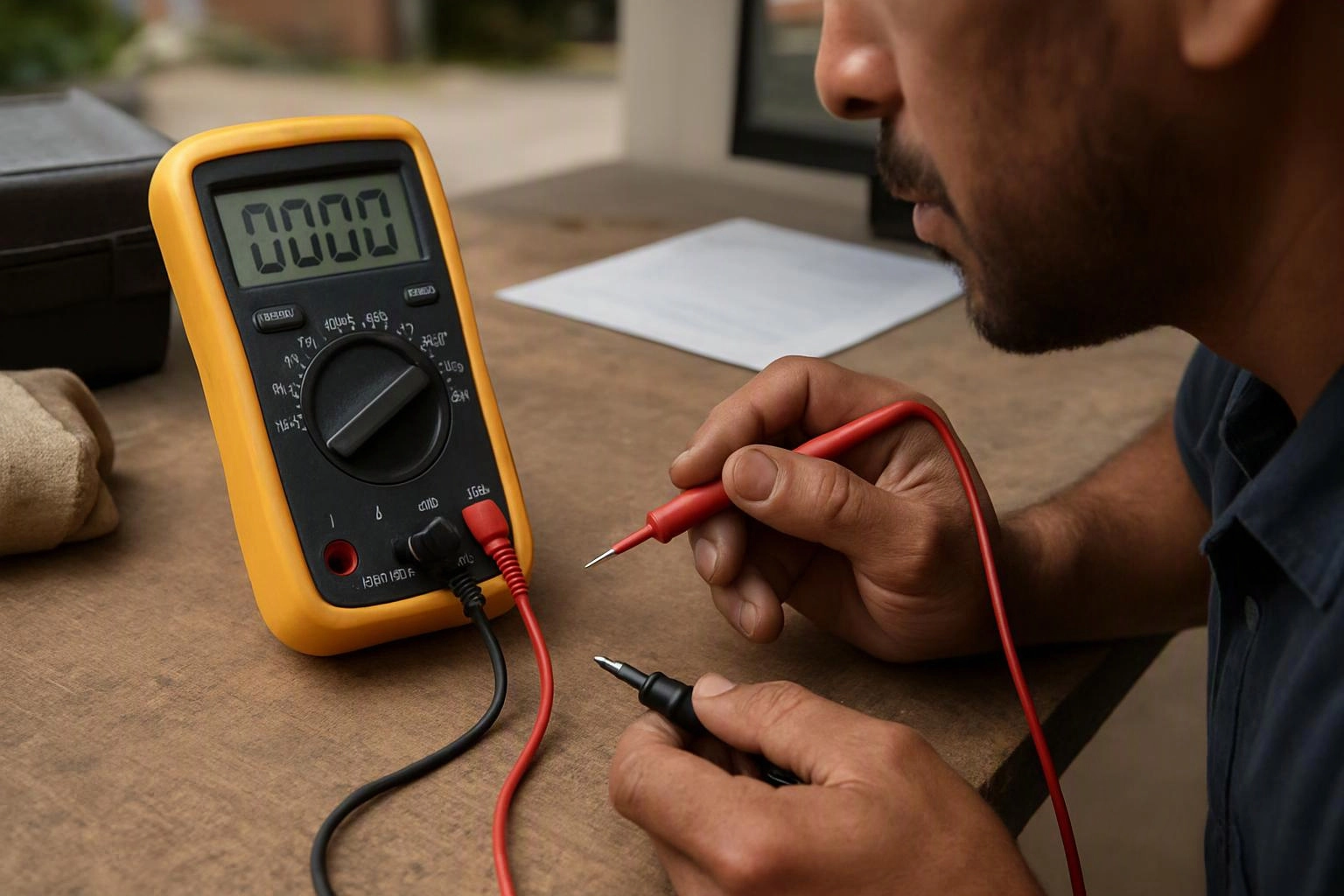
A multimeter measures electrical properties through test leads connected to selected points in a circuit. The meter setting determines what the instrument evaluates, such as voltage between two points or resistance across a disconnected component. The display then shows a reading that describes the circuit condition.
Related glossary terms: Continuity Test, Voltage Drop, Open Neutral.
During troubleshooting, an electrician compares readings at related points to narrow down a fault. For example, a voltage reading at an outlet can be compared with a reading at the panel. A resistance or continuity check can help identify an open connection, damaged conductor, or faulty component. A continuity test focuses on whether a conductive path exists, while a multimeter can perform that check along with other measurements.
From the GMB Electric team
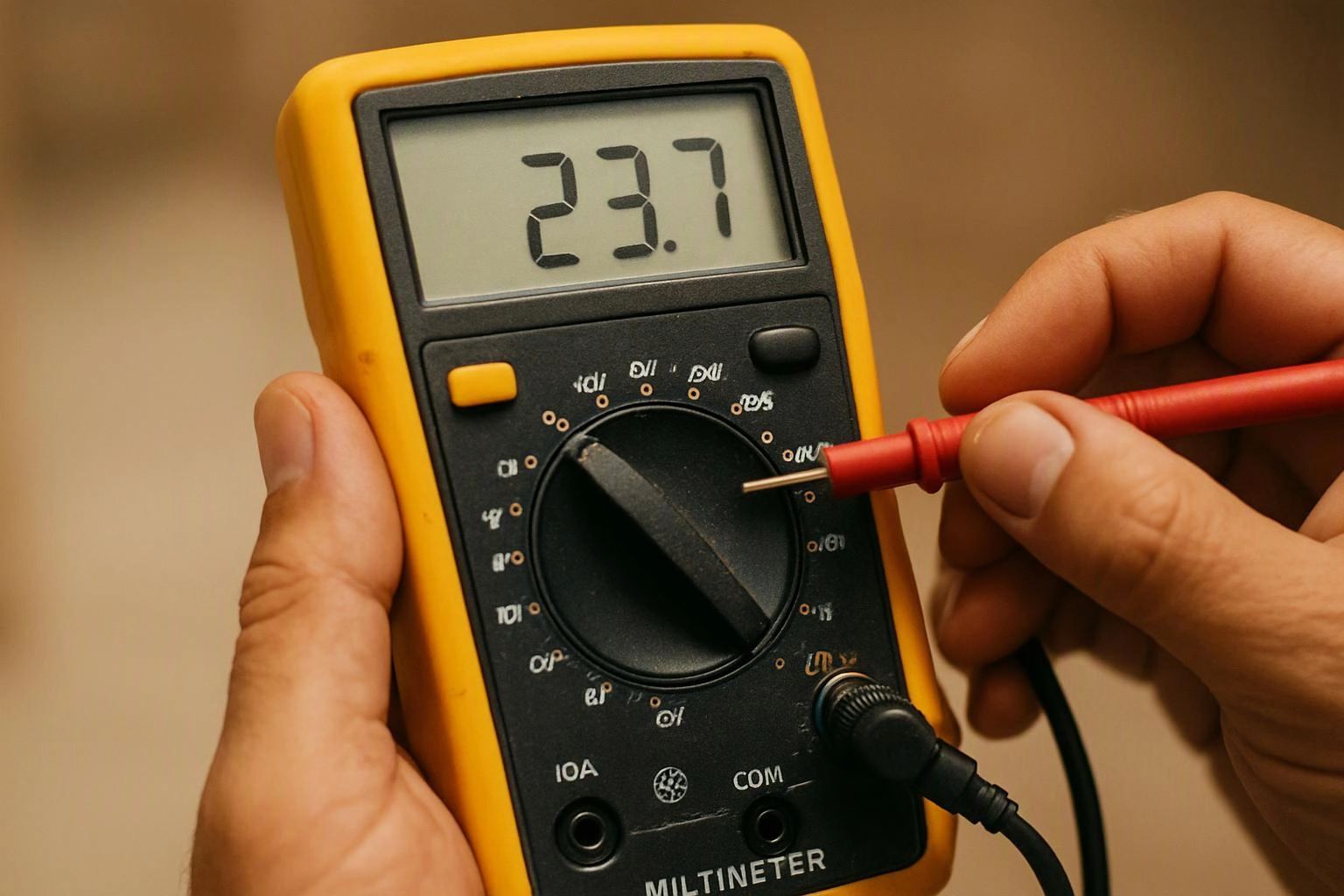
When we troubleshoot a circuit, we select the meter function that matches the question we need to answer. We check readings at logical points, compare them with the circuit layout, and avoid treating one measurement as proof of the entire fault. Our team also confirms unexpected readings before recommending a repair.
Multimeter in Practice: A Real-World Example
A homeowner reports that an outlet works intermittently. During electrical troubleshooting, we use a multimeter to compare voltage at the outlet, nearby connections, and the supplying circuit so the fault can be narrowed to a connection, conductor, or device.
Related Services
Related Terms
Continuity Test
A continuity test is an electrical check that determines whether a circuit path is complete from…
Voltage Drop
Voltage Drop is the reduction in electrical voltage that occurs as current travels through a conductor…
Open Neutral
An open neutral is a break or failed connection in the neutral conductor of an electrical…
Circuit Breaker
A Circuit Breaker is a resettable electrical switching device that opens a circuit when current exceeds…
GMB Electric
Have Questions About Multimeter?
Contact GMB Electric for practical guidance on Multimeter and related 24 hour electrician work in Indianapolis.