What Is a Ballast?
A ballast is an electrical component that regulates current in certain lighting systems. It helps fluorescent lamps start and keeps their electrical output stable during operation. Traditional magnetic ballasts use coils, while electronic ballasts use electronic circuits. The correct ballast must match the lamp type, fixture design, and supply voltage.
Quick Facts About Ballast
Category
Lighting control component
Used for
Fluorescent lighting systems
Common confusion
Mistaken for a lamp socket or LED driver
Also called
Fluorescent ballast, Magnetic ballast
Often discussed with
Commercial Lighting Repair
Key Takeaways About Ballast
- Ballasts regulate current for compatible lamps.
- The lamp and ballast must match.
- A ballast is not the same as a lamp socket.
How Ballast Works
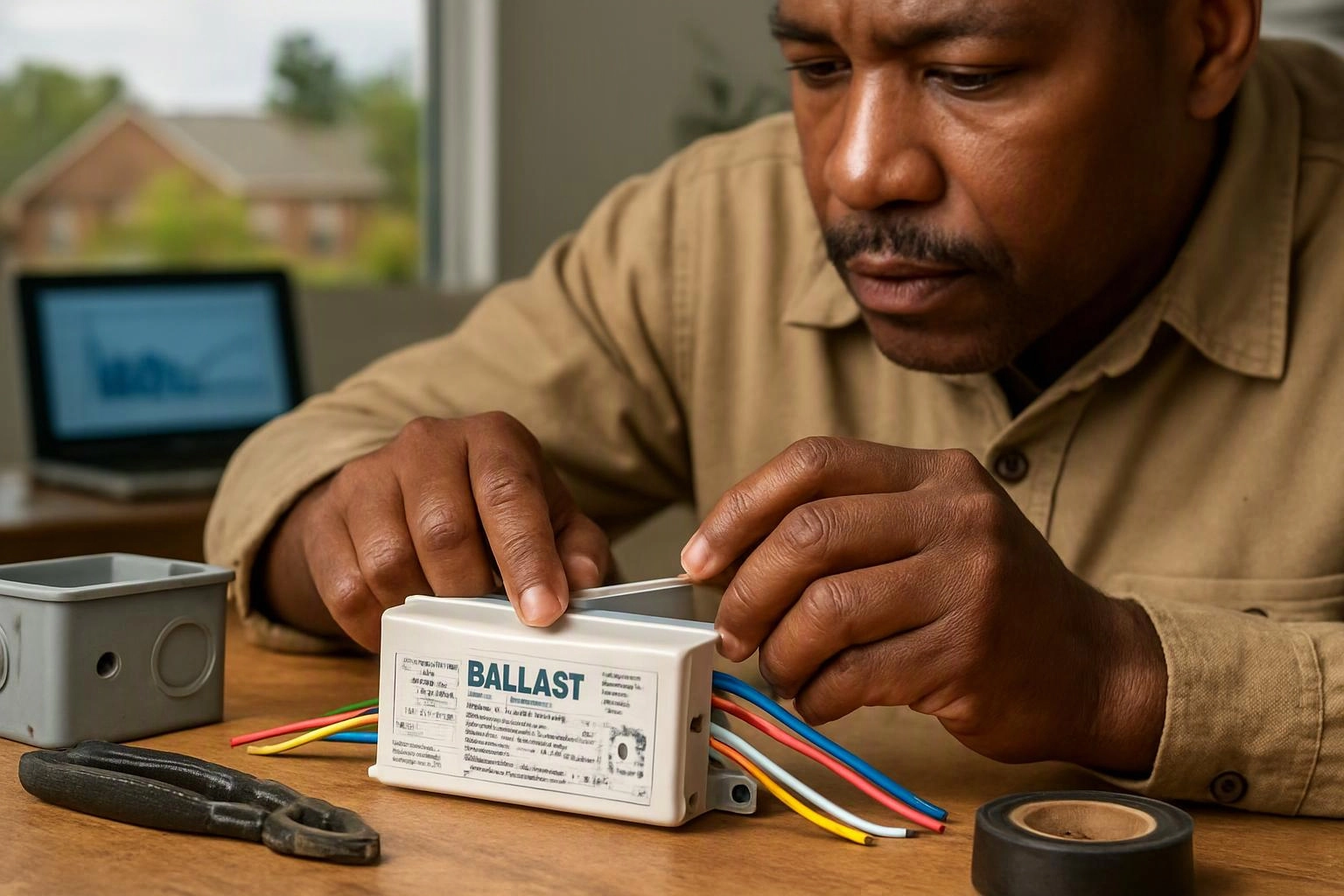
A ballast controls the electrical current that reaches a compatible lamp. Fluorescent lamps need help starting because their internal gas does not conduct steadily on its own. The ballast supports startup and then limits current as the lamp operates. This control prevents the lamp from drawing uncontrolled current through the fixture.
Related glossary terms: Multimeter, Voltage Drop, Wiring Diagram.
Magnetic ballasts use a coil and may work with a starter or other starting component. Electronic ballasts use circuit boards to control the lamp with high-frequency current. A replacement must match the lamp style, socket arrangement, fixture wiring, and supply voltage. An electronic ballast may not work with a fixture designed for a magnetic ballast. LED replacements may require ballast compatibility or ballast removal, depending on the product design.
From the GMB Electric team
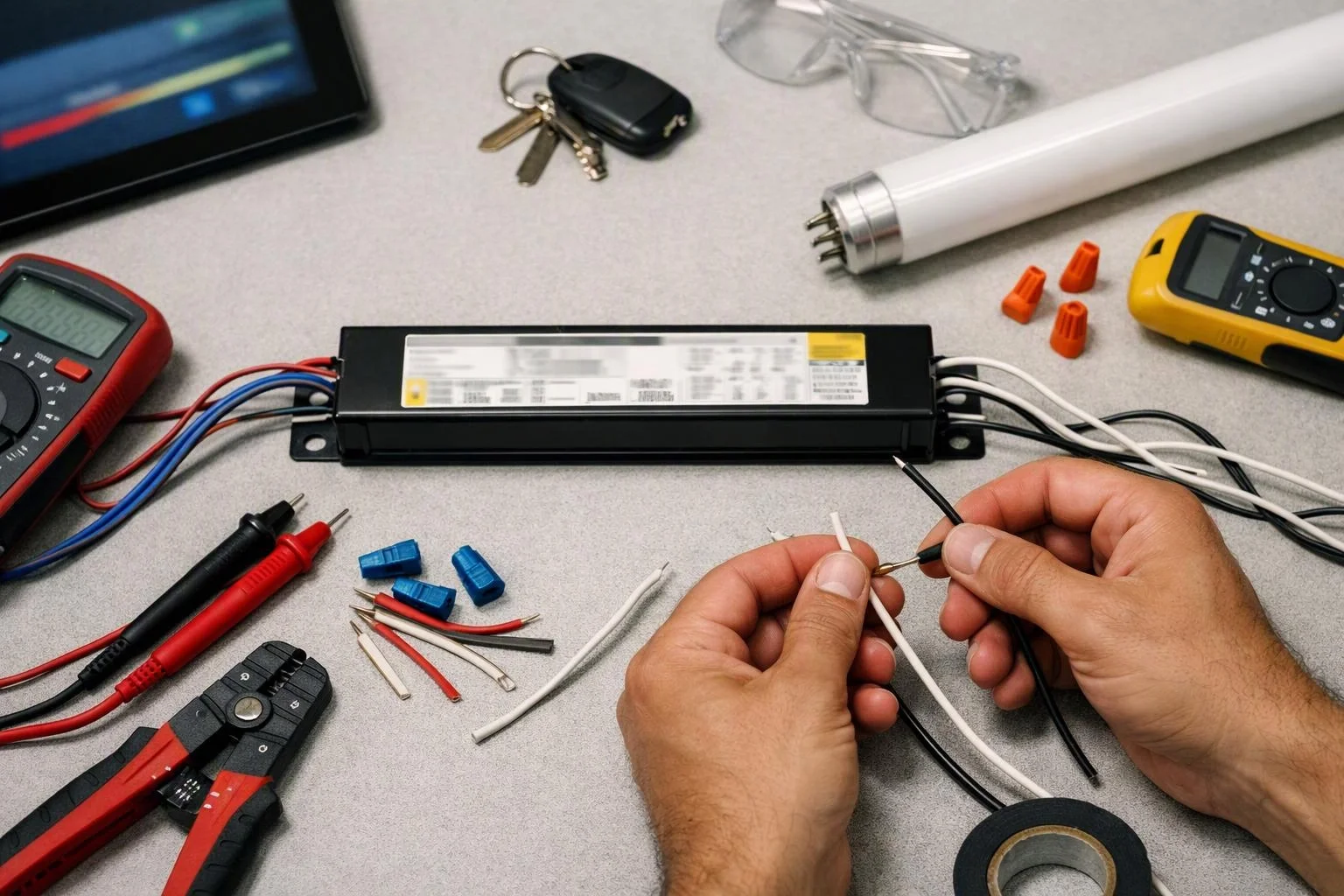
When we inspect a ballast, we check the fixture wiring, lamp type, ballast markings, and visible signs of heat or damage. We also test whether the fault comes from the ballast, lamp, socket, or supply circuit before recommending a repair. Our team documents compatibility when a commercial fixture is changed to LED operation.
Ballast in Practice: A Real-World Example
A commercial hallway fixture flickers and takes repeated attempts to start. We inspect the lamps and sockets, then verify whether the ballast matches the fixture before repairing the lighting assembly.
Related Services
Related Terms
Multimeter
A multimeter is a handheld electrical testing instrument that measures values such as voltage, current, and…
Voltage Drop
Voltage Drop is the reduction in electrical voltage that occurs as current travels through a conductor…
Wiring Diagram
Wiring Diagram is a visual plan that shows how electrical devices, conductors, terminals, and protective components…
GMB Electric
Have Questions About Ballast?
Contact GMB Electric for practical guidance on Ballast and related 24 hour electrician work in Indianapolis.