Electrical Panel Replacement vs. Electrical Panel Upgrade
Electrical panel replacement installs a new panel, while an electrical panel upgrade improves capacity or related service components; GMB Electric evaluates the existing equipment, electrical demand, wiring, safety concerns, and project requirements to recommend the appropriate approach.
Request an EstimateWhat Is the Difference Between Panel Replacement and Panel Upgrade?
Electrical panel replacement removes the existing panel and installs a new panel, while an electrical panel upgrade improves the electrical system's capacity, equipment, or service components when the existing panel may not need complete replacement.
Replacement focuses on the panel enclosure, bus bars, circuit breakers, and connections. An upgrade may include the panel, main breaker, service conductors, utility connection, or other electrical service equipment. We review the full system before deciding which scope fits.
Electrical Panel Replacement vs. Electrical Panel Upgrade at a Glance
Electrical panel replacement and electrical panel upgrade projects can overlap, but they solve different problems. The right option depends on equipment condition, electrical demand, service capacity, and the work planned for the property.
| Factor | Electrical Panel Replacement | Electrical Panel Upgrade |
|---|---|---|
| Primary purpose | Replaces an obsolete, damaged, or unsuitable panel. | Improves capacity, service equipment, or related electrical components. |
| Cost drivers | Panel type, circuit count, wiring condition, access, grounding, and bonding. | Service size, incoming service, utility requirements, load work, and permit requirements. |
| Project timeline factors | Circuit organization, panel access, connection work, and inspection needs. | Utility coordination, service conductors, equipment changes, and inspection needs. |
| Maintenance | New equipment can improve organization and support proper circuit protection. | Improved capacity can support planned loads when the system is designed correctly. |
| Best fit | Unsafe, damaged, obsolete, or incompatible panel equipment. | Higher electrical demand, service changes, or a home renovation. |
Replacement may be the narrower project, while an upgrade may involve more of the electrical service. We explain the included work before preparing a project quote.
What Does Electrical Panel Replacement Include?
Electrical panel replacement includes removing an obsolete, damaged, or unsuitable panel and installing a compatible panel with properly connected and identified circuits.
Our team matches the new electrical panel to the existing branch circuits and circuit breakers. We also review the panel enclosure, electrical connections, grounding, bonding, and circuit labeling. If we find wiring or service concerns, we explain how those conditions affect the project scope.
When replacement is appropriate, we complete the work with attention to panel compatibility and circuit protection. You can review our Electrical Panel Replacement service for more information.
What Does an Electrical Panel Upgrade Include?
An electrical panel upgrade improves the system's ability to support electrical demand by addressing the panel, service equipment, incoming service, or related capacity requirements identified during evaluation.
We begin with a load calculation to compare present electrical load with future electrical demand. The work may involve a larger main breaker, updated service conductors, an electrical service upgrade, or utility coordination. The exact scope depends on the existing service and the equipment the property needs to support.
An upgrade does not always require replacing every component. We identify which parts need work and explain how each change supports safe, dependable circuit operation.
Advantages of Electrical Panel Replacement
Electrical panel replacement can address equipment condition without automatically changing the entire electrical service. We use the evaluation to keep the project focused on the panel and related work that the system needs.
Best for: Electrical panel replacement is best for a panel that is unsafe, damaged, obsolete, or incompatible with the home's wiring and electrical requirements.
Advantages of an Electrical Panel Upgrade
An electrical panel upgrade is designed around the electrical load the property has now and may need in the future. We use service information and circuit planning to determine whether more capacity is required.
Best for: An electrical panel upgrade is best when the service capacity or related equipment cannot support present or planned electrical demand.
Which Option Is Best for Your Electrical System?
Electrical panel replacement is usually the better fit when the panel itself is unsafe, damaged, obsolete, or incompatible, while an electrical panel upgrade is the better fit when the system needs more capacity or upgraded service components.
We assess electrical panel condition, electrical load, future electrical demand, service capacity, and code compliance before recommending a path. Home improvement plans can change the answer because new equipment may require dedicated circuits or additional service capacity.
What Changes the Cost of This Electrical Project?
The cost of electrical panel replacement or upgrade changes with the equipment selected, service capacity, circuit work, wiring condition, grounding requirements, access, and any utility or permit requirements; GMB Electric can provide an exact quote after evaluating the system.
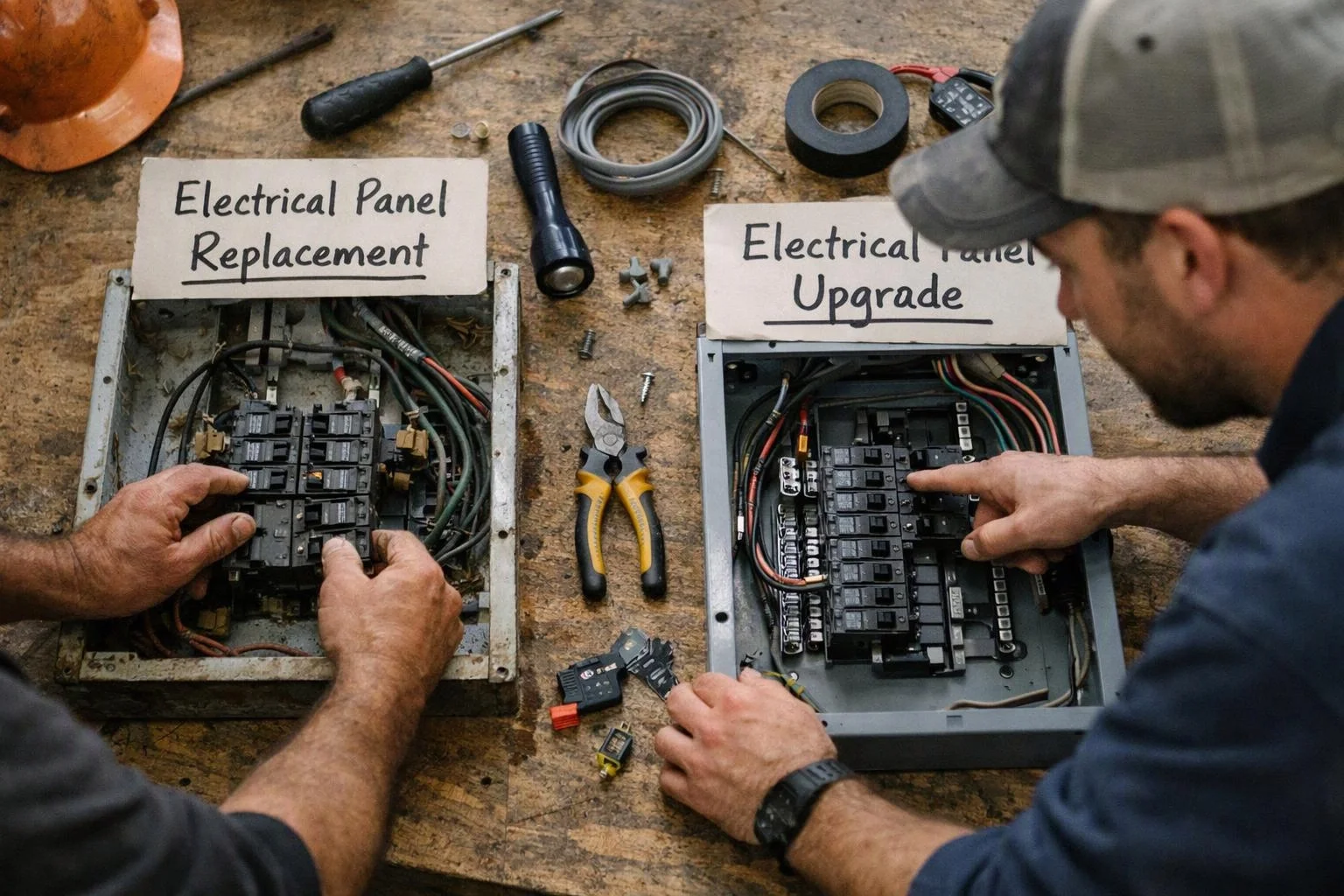
Panel type, electrical service size, circuit count, and access to electrical equipment can affect the work involved. Grounding and bonding corrections may also be needed. Utility requirements and permit requirements can add coordination to an electrical service upgrade.
Our quote explains the project scope, included equipment, circuit work, and known requirements. Contact us through our contact page to request a project review.
Warning Signs That an Electrical Panel Needs Attention
Electrical panel warning signs include heat, unusual sounds, visible damage, and repeated circuit interruptions. We treat these signs as reasons to stop using affected equipment and arrange an electrical evaluation.
Do not remove the panel cover or attempt to bypass a breaker or fuse. We can inspect the equipment and explain the safest next step.
How We Evaluate Replacement and Upgrade Options
Our electrical evaluation connects the panel condition with the home's present and planned electrical requirements. We use the findings to separate a panel problem from a service capacity problem.
This process helps us determine whether to replace an electrical panel, upgrade an electrical panel, or address related service equipment.
Planning for Panel Work During a Home Renovation
Electrical panel planning should happen before a renovation begins so new appliances, heating and cooling equipment, chargers, and dedicated circuits can be matched to available service capacity.
We review circuit planning for a kitchen renovation, HVAC equipment, an electric vehicle charger, an outbuilding, and other future electrical loads. Early planning can show whether the existing panel can support the project or whether an electrical service upgrade belongs in the renovation scope.
Share appliance plans and equipment specifications with us before walls close or new systems are ordered. Our team can match the planned loads with branch circuits, circuit protection, and available service capacity.
What to Expect During Electrical Panel Replacement or Upgrade
Electrical panel replacement or upgrade begins with a site assessment and ends with system testing and any required inspection. We explain the work before the electrical shutdown begins.
The exact work sequence depends on whether the project involves only a panel changeout or broader service equipment changes.
What Should You Ask Before Approving Panel Work?
Before approving panel work, ask for a clear project scope that explains panel compatibility, service capacity, circuit protection, grounding, wiring condition, and inspection requirements.
Ask whether the work is a panel replacement, an electrical panel upgrade, or an electrical service upgrade. Confirm which branch circuits are included, how circuit labeling will be handled, and whether the existing wiring can remain.
We explain the equipment selected, the work included, and the conditions that could change the project scope. This gives you a clear basis for approving the work.
When Is Fuse Box Replacement the Better Path?
Fuse box replacement is the better path when an older fused system no longer supports the home's safety or electrical demands, but the appropriate solution depends on the service, wiring, and equipment condition.
Fuse replacement is not the same as adding electrical capacity. A fuse-to-breaker conversion may provide modern circuit breakers, but the service capacity and branch circuit wiring still need review.
We evaluate older homes for fuse box condition, electrical safety, service capacity, grounding, bonding, and wiring concerns. The result may be fuse box replacement, electrical panel replacement, or a broader electrical service upgrade.
How GMB Electric Helps You Choose the Right Panel Solution
GMB Electric evaluates electrical panel replacement, electrical panel upgrade, electrical service upgrade, and fuse box replacement options according to the condition and requirements of your system.
We inspect the electrical equipment, complete load calculation work, review circuit planning, and explain the project scope. Our team then prepares a project quote based on the equipment, wiring, access, grounding, bonding, utility, and permit requirements involved.
Contact GMB Electric to arrange an electrical evaluation and discuss the right panel solution for your property.
Questions About Panel Replacement and Upgrades
Can an electrical panel be upgraded without replacing it?
Yes, an electrical panel can sometimes be upgraded without replacing it when the existing equipment is compatible and the needed work involves related service components or capacity requirements. GMB Electric evaluates the panel, service equipment, wiring, and load before confirming that approach.
Is replacing a fuse box the same as upgrading an electrical panel?
No, fuse box replacement changes the type of distribution equipment, while an electrical panel upgrade addresses capacity or related service components. We review the wiring, service capacity, grounding, and electrical load to determine the correct scope.
Does a home renovation require an electrical panel upgrade?
No, a home renovation does not always require an electrical panel upgrade. We review the planned appliances, HVAC equipment, chargers, dedicated circuits, and future electrical loads to determine whether the existing service capacity is sufficient.
What electrical panel problems require immediate attention?
Burning odor, scorch marks, a warm panel, buzzing sounds, corrosion, and repeated tripped breakers require immediate attention. We inspect the equipment and identify whether the issue involves a circuit, connection, panel condition, or service concern.
Can an electrical panel replacement support additional circuits?
Yes, an electrical panel replacement can support additional circuits when the panel, branch circuit wiring, main breaker, and service capacity are suitable. We complete circuit planning and load calculation work before confirming available capacity.
What should be checked before replacing an electrical panel?
Before replacing an electrical panel, we check panel condition, circuit breakers, branch circuits, wiring, service conductors, grounding, bonding, load, panel compatibility, and inspection requirements.
Related Resources
Electrical Panel Replacement Mistakes: What Homeowners Should Avoid
What It CostsElectrical Service Time and Quote Preparation Guide
Brand vs BrandElectrical Panel Replacement Companies Worth Comparing in Indianapolis (2026)
Brand vs BrandFuse Box Replacement Companies Worth Comparing in Indianapolis (2026)