What Is a Standby Generator?
A standby generator is a permanently installed backup power system that supplies electricity when utility power fails. A transfer switch connects selected household or commercial circuits to the generator, then returns those circuits to utility power after service is restored. Standby generators commonly use natural gas or propane as fuel.
Quick Facts About Standby Generator
Category
Backup power equipment
Used for
Outage power for selected circuits
Common confusion
Portable generator
Also called
Backup Generator, Automatic standby generator
Often discussed with
Generator Maintenance
Key Takeaways About Standby Generator
- A transfer switch separates generator power from utility power.
- The system supports selected circuits, not always every electrical load.
- A portable generator is not the same as a permanently installed system.
How Standby Generator Works
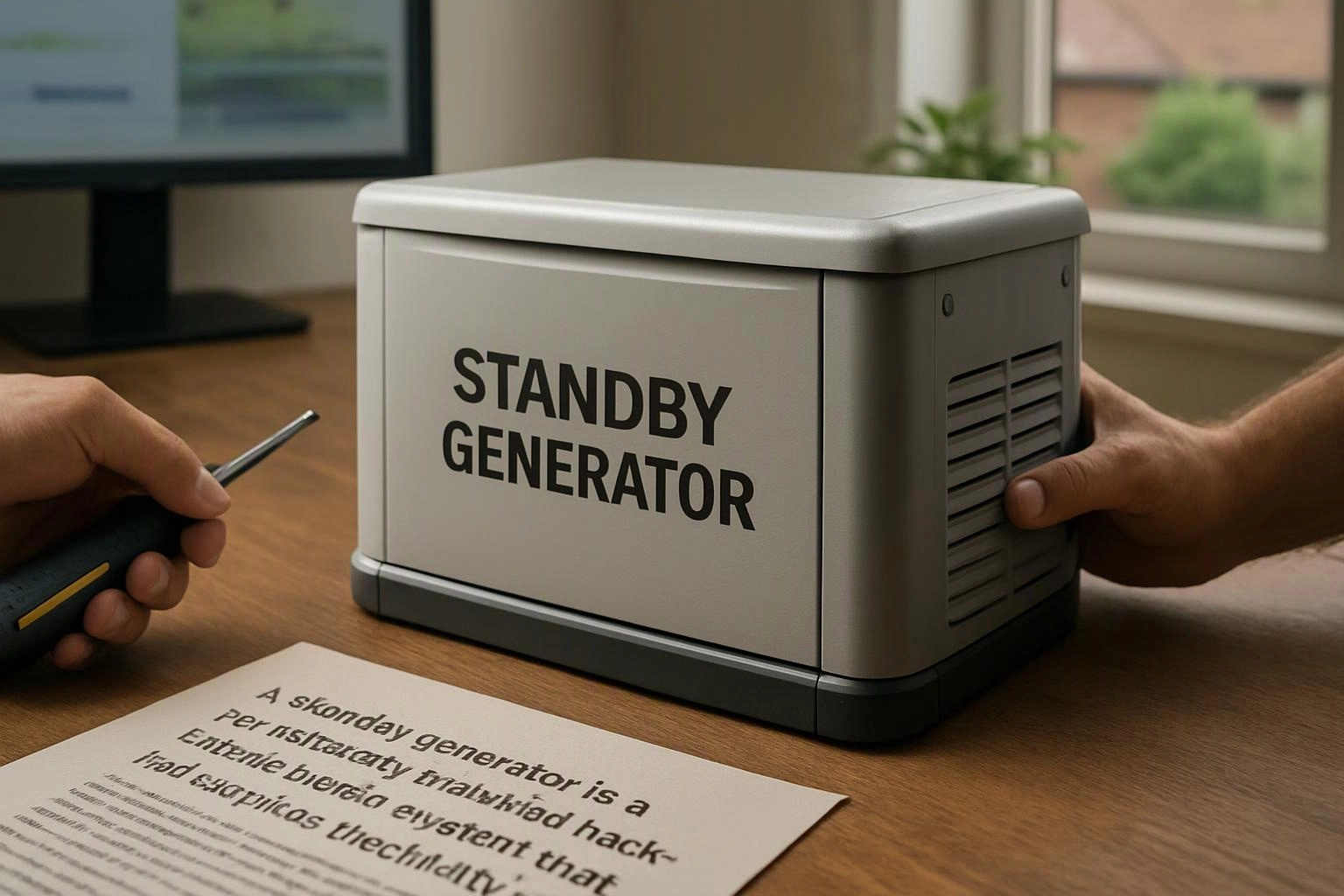
A standby generator monitors the electrical supply through a transfer switch. When utility power fails, the generator starts and the switch moves designated circuits to generator power. After utility service returns, the switch reconnects those circuits and the generator shuts down after its operating cycle.
Related glossary terms: Transfer Switch, Manual Transfer Switch, Load Management.
Generator capacity must match the loads connected to the system. A load calculation helps identify equipment that may run during an outage, such as a furnace, sump pump, refrigerator, or selected lighting. The fuel system, battery, wiring, transfer switch, and control settings all affect dependable operation.
Generator maintenance checks the equipment before an outage exposes a problem. Service may include inspecting connections, checking fluid levels, reviewing battery condition, testing controls, and confirming that the transfer process works as intended.
From the GMB Electric team
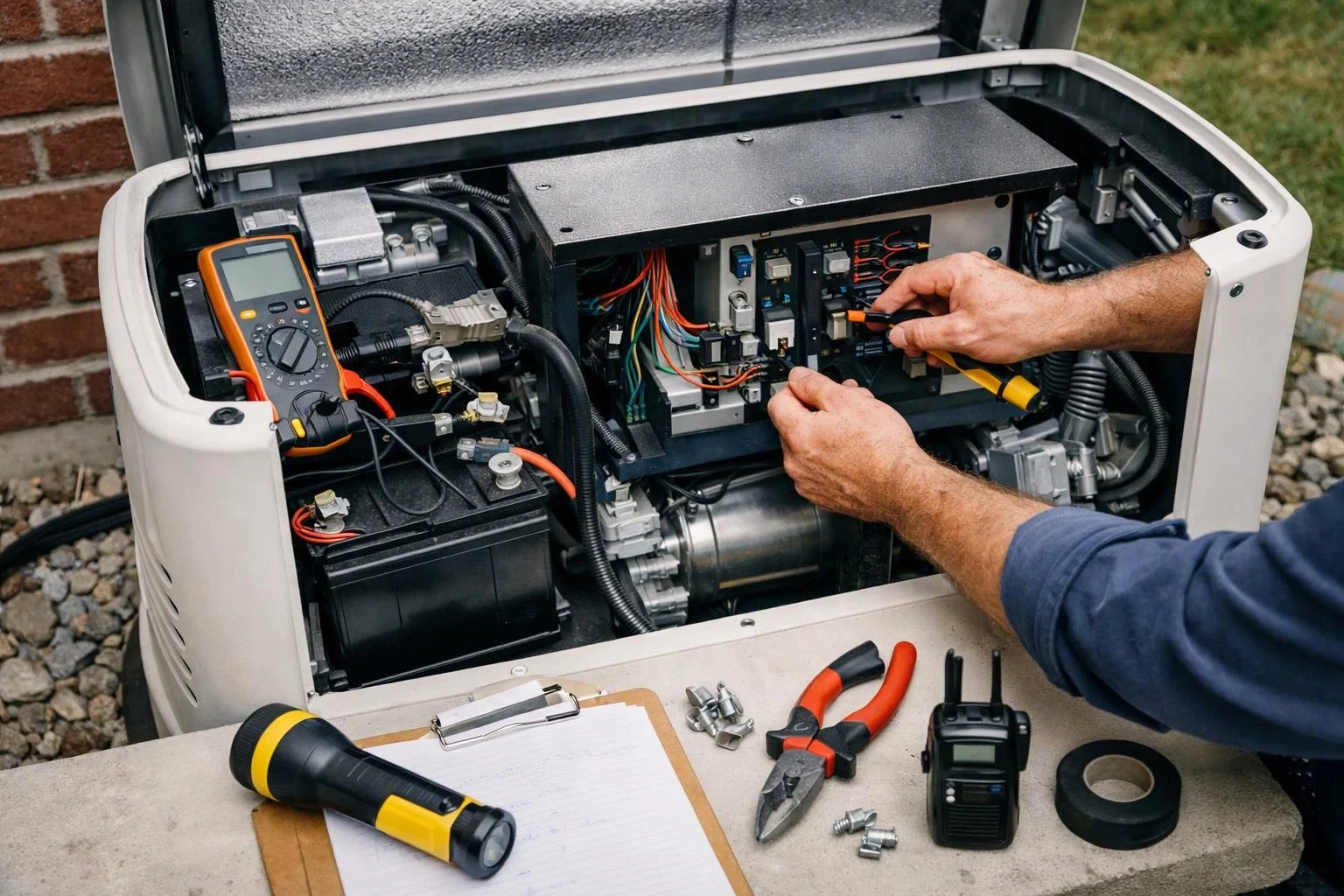
When we service a standby generator, we inspect the generator, transfer switch, wiring, battery, and fuel connection as one system. Our team also reviews the connected loads and tests the operating sequence, because a generator can run properly while a transfer or circuit connection still needs attention.
Standby Generator in Practice: A Real-World Example
A homeowner may connect a standby generator to selected circuits that serve the furnace, sump pump, refrigerator, and essential lighting. During an outage, the transfer switch moves those circuits to generator power while other loads remain disconnected.
Related Services
Related Terms
Transfer Switch
A Transfer Switch is a switching device that moves electrical loads between a utility source and…
Manual Transfer Switch
A Manual Transfer Switch is a switching device that connects selected electrical loads to an alternate…
Load Management
Load Management is the planned control of electrical demand across connected equipment. The system monitors available…
Load Shedding
Load Shedding is a power management process that disconnects selected electrical loads to keep a generator…
GMB Electric
Have Questions About Standby Generator?
Contact GMB Electric for practical guidance on Standby Generator and related 24 hour electrician work in Indianapolis.