Generator Installation Mistakes That Create Safety and Performance Problems
Generator installation mistakes can create electrical hazards, carbon monoxide exposure, equipment damage, nuisance shutdowns, and poor backup performance; GMB Electric identifies these risks, corrects unsafe installations, and explains the checks that protect your home and generator.
Request an Estimate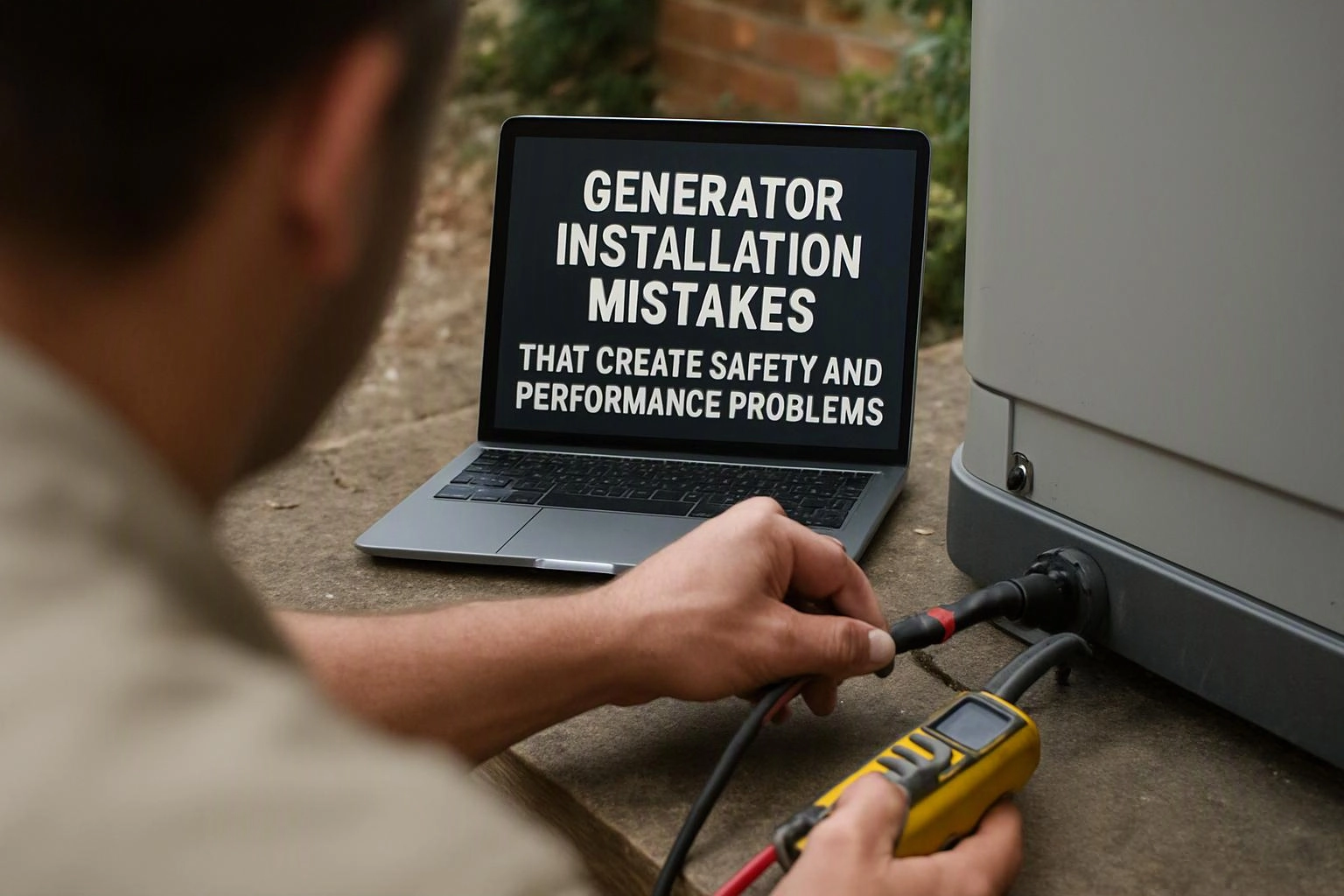
Why Generator Installation Mistakes Affect Safety and Performance
Generator installation mistakes can create hazards and prevent the generator from supplying reliable backup power because installation decisions affect fuel, exhaust, wiring, grounding, and transfer equipment.
Electrical safety depends on how the generator connects to the home and utility system. Poor placement or a blocked exhaust path can also expose occupants to carbon monoxide from combustion exhaust.
We review the complete generator system so safety concerns and backup power problems are addressed together.
The Installation Mistakes We Check First
Generator inspections begin with the location, exhaust path, electrical connections, transfer equipment, fuel system, grounding, and required operating clearances.
Our team checks both automatic standby generators and portable generators. We also review the transfer switch, electrical panel, generator feeder, enclosure, and fuel supply.
These checks show whether the installation can operate safely during utility power loss.
Installing the Generator Too Close to the Home
Generator placement is unsafe when a combustion engine operates too close to building openings, combustible materials, or areas where exhaust can collect.
This mistake often happens when the available space looks convenient but does not provide a safe exhaust clearance. Carbon monoxide can enter through windows, doors, vents, or other openings.
We inspect the generator enclosure, exhaust outlet, and surrounding clearances. Our crew relocates equipment or corrects the exhaust system when the existing arrangement creates a hazard.
The cost depends on access, relocation needs, exhaust changes, surface work, and electrical rerouting. We explain the required correction and prepare a quote after inspecting the site.
Directly Connecting a Generator to the Electrical Panel
Directly connecting a generator to an electrical panel without approved switching can cause backfeeding and expose utility lines or people to electrical shock.
Backfeeding happens when generator power reaches circuits or utility conductors without proper isolation. The connection can also damage the generator, electrical panel, or home wiring.
We install or correct the transfer equipment that separates generator power from utility power. Our team verifies the electrical panel connection and removes unsafe wiring.
The cost depends on the panel design, existing wiring, transfer equipment, access, and correction work. We include those repair drivers in our quote.
Sizing the Generator for the Wrong Electrical Load
Generator sizing is incorrect when the generator cannot handle the home’s running load and starting load at the same time.
Motor loads from pumps, furnaces, air conditioners, and refrigerators can draw more power during startup. An undersized unit may overload, shut down, or fail to start important equipment.
We complete a load calculation that considers running load, starting load, motor load, selected circuits, and generator capacity.
The cost depends on whether the existing generator can support the required load or whether wiring, load management, or equipment changes are needed. We explain the options before completing the work.
Using Undersized or Improper Wiring
Conductor sizing must match the generator feeder, expected current, insulation rating, installation method, and allowed ampacity.
Improper wiring can create voltage drop, overheating, nuisance shutdowns, short circuits, and equipment damage. Loose or damaged connections can make the problem worse.
We inspect feeder conductors, terminations, overcurrent protection, and routing. Our team corrects wiring that cannot safely carry the generator load.
The cost depends on conductor access, route length, panel changes, damaged materials, and the amount of rewiring required. We identify these factors during the inspection.
Skipping the Transfer Switch or Interlock Requirements
A transfer switch or approved interlock provides the backfeed protection needed to control how generator power enters the home.
An automatic transfer switch changes the source of power without manual action. A manual transfer switch requires a person to operate it, while an interlock controls which main connection can remain active.
We inspect the service equipment, electrical panel, transfer switch, and interlock arrangement. Our team corrects missing or incompatible equipment.
The cost depends on the existing service equipment, panel compatibility, selected transfer method, and wiring changes. We include code correction needs in the quote.
Ignoring Grounding, Bonding, and Neutral Configuration
Grounding and bonding connect exposed metal parts and fault paths so protective devices can respond to unsafe current.
The neutral conductor must be configured correctly for the generator system. A separately derived system may require different neutral bonding than a system that keeps the neutral connected through the service equipment.
We verify the grounding electrode, bonding connections, neutral arrangement, and ground fault protection. Our team corrects connections that can cause nuisance tripping or unsafe fault paths.
The cost depends on access to the grounding electrode, existing bonding, service configuration, and correction work. We explain the electrical repair needed for safe operation.
Routing Fuel Lines and Exhaust Components Improperly
Improper fuel line or exhaust system routing can cause a fuel leak, combustion exhaust exposure, heat damage, or contact with combustible materials.
Natural gas and propane systems require suitable routing, supports, shutoff access, and connections. Exhaust components also need safe routing away from openings and materials that can burn.
We inspect the fuel line, connections, exhaust outlet, supports, and nearby surfaces. Our crew corrects unsafe routing and coordinates the electrical work with generator operation.
The cost depends on fuel source, access, rerouting needs, damaged components, and exhaust changes. We identify those cost drivers before preparing the quote.
Installing the Generator Where Water, Snow, or Debris Can Reach It
Generator weather protection is inadequate when water, flooding, snow accumulation, leaves, or other debris can reach the enclosure or block ventilation.
Poor drainage can damage electrical parts and the engine. Blocked openings can restrict cooling and exhaust flow, which may lead to overheating or shutdowns.
We inspect the generator enclosure, pad, drainage, ventilation openings, and surrounding debris clearance. Our team corrects placement or protection issues that threaten operation.
The cost depends on drainage work, surface changes, enclosure repairs, relocation, and access. We describe the correction needed for dependable backup power.
Failing to Test the Generator Under Realistic Load
A generator commissioning check must confirm automatic start, transfer operation, voltage, frequency, and performance under a realistic electrical load.
A generator can appear ready while failing to transfer power or support connected equipment. Inadequate testing can leave nuisance shutdowns and wiring problems undiscovered.
We perform load testing and verify the automatic start sequence, transfer equipment, voltage, frequency, alarms, and shutdown response.
The cost depends on testing access, correction needs, transfer equipment, load requirements, and equipment condition. We separate testing from any generator repair required.
What Each Generator Installation Mistake Can Cost You
Generator installation mistake costs depend on the failure point and the work needed to make the system safe. Equipment damage, electrical repair, fuel system repair, code correction, and downtime can all affect the final quote.
We inspect the installation before recommending work so the quote reflects the actual correction instead of a guess.
| Problem area | Possible consequence | Main cost drivers |
|---|---|---|
| Placement and exhaust | Carbon monoxide exposure, heat damage, or relocation needs | Access, exhaust routing, surface work, and enclosure changes |
| Electrical connection | Backfeeding, shock risk, short circuit, or equipment damage | Transfer equipment, panel compatibility, and rewiring |
| Generator sizing | Overload, failed startup, or nuisance shutdown | Load calculation, load management, and equipment capacity |
| Fuel and grounding systems | Fuel leak, fault current problems, or unsafe operation | Fuel routing, grounding access, bonding, and correction work |
| Testing and commissioning | Unreliable backup power or hidden equipment damage | Load testing, transfer operation, and generator repair |
We explain whether the correction involves electrical work, fuel system work, generator repair, or a combination of these services. You can request an exact quote after our team reviews the installation.
How We Correct Unsafe Generator Installations
GMB Electric corrects unsafe generator installations by inspecting the system, identifying the failure points, planning the required corrections, completing the electrical work, and testing the generator under operating conditions.
We explain the work needed at each stage and provide a quote based on the condition of the existing system.
When to Call GMB Electric About a Generator Installation
Call GMB Electric when a generator creates an immediate safety concern, fails to transfer power, repeatedly shuts down, or shows signs of wiring or equipment damage.
Do not open energized equipment or continue operating a generator with visible damage. Our team can inspect the electrical panel, transfer equipment, wiring, and generator system.
How to Prevent Generator Installation Problems
Generator installation problems are easier to prevent when the equipment is correctly sized, safely connected, properly ventilated, and checked during maintenance.
Keep installation documentation with the generator model, fuel type, transfer equipment, wiring changes, and operating instructions. Our team can use that information during generator maintenance and future generator repair.
Transfer switch testing should confirm that the system changes sources correctly. Fuel inspection should check the fuel line and connections, while exhaust inspection should confirm that combustion exhaust has a safe path.
Regular checks also help identify weather exposure, debris blockage, loose connections, equipment damage, and changes to the home’s electrical load.
What to Have Ready Before a Generator Installation Review
Generator installation reviews are easier when you have the equipment and electrical records available for our team.
These details help us focus the inspection on the system’s actual condition and prepare a clear correction plan.
Questions About Generator Installation Mistakes
Can a generator damage appliances if it is installed incorrectly?
Yes, an incorrectly installed generator can damage appliances through unstable voltage, incorrect frequency, overload, short circuits, or an unsafe neutral connection. GMB Electric checks generator sizing, wiring, grounding, bonding, and transfer operation to reduce those risks.
Why does a generator keep shutting off after installation?
A generator can keep shutting off after installation because of overload, incorrect fuel delivery, blocked exhaust, wiring faults, transfer problems, or a control setting issue. We test the generator under load and inspect the electrical and fuel systems before recommending generator repair.
Can a generator be connected directly to a home electrical panel?
No, a generator should not be connected directly to a home electrical panel without approved transfer equipment or an approved interlock that prevents backfeeding. We inspect the panel and install or correct the equipment needed to isolate generator power from utility power.
What should be checked after a generator installation?
A completed generator installation should be checked for safe placement, exhaust clearance, fuel connections, conductor sizing, grounding, bonding, transfer operation, automatic start, voltage, frequency, and load performance. We document the correction needs and test the system under operating conditions.
Is generator installation a job a homeowner can safely do?
No, generator installation involves fuel, combustion exhaust, electrical connections, transfer equipment, grounding, and backfeed protection. You can gather the model and installation records, but GMB Electric handles the inspection, electrical work, correction, and operational testing.
Generator installation mistakes can affect safety, equipment life, and the reliability of home backup power. Contact GMB Electric for an installation review, correction plan, or generator repair quote.
Contact GMB Electric